
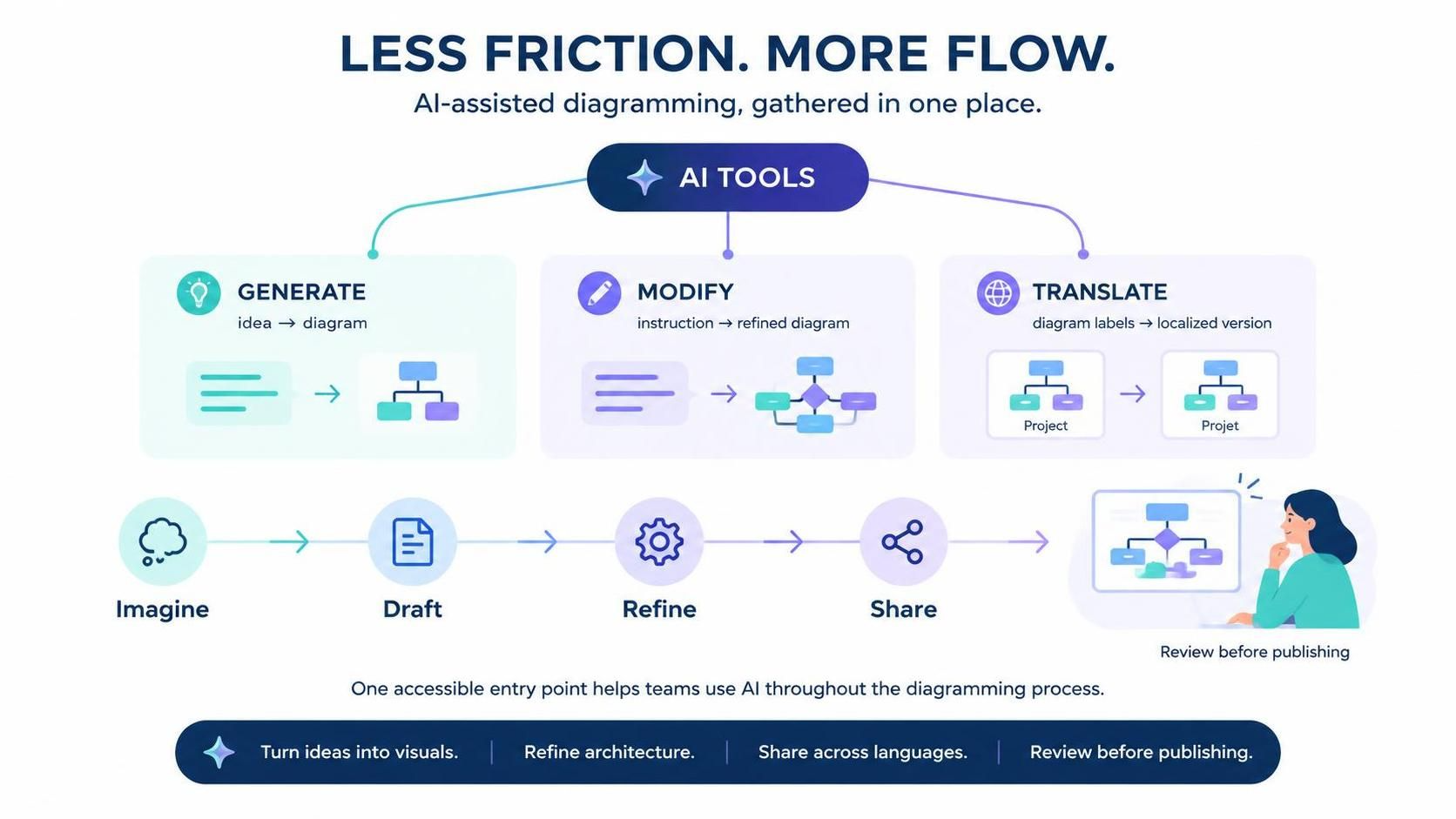
Mastering the Modern Modeling Workflow: A Guide to AI-Driven Diagramming in VPasCode
Discover how VPasCode's AI Tools transform diagramming by converting natural language into visual models using its unified Generate, Modify, and Translate workflow.
Discover how VPasCode's AI Tools transform diagramming by converting natural language into visual models using its unified Generate, Modify, and Translate workflow.
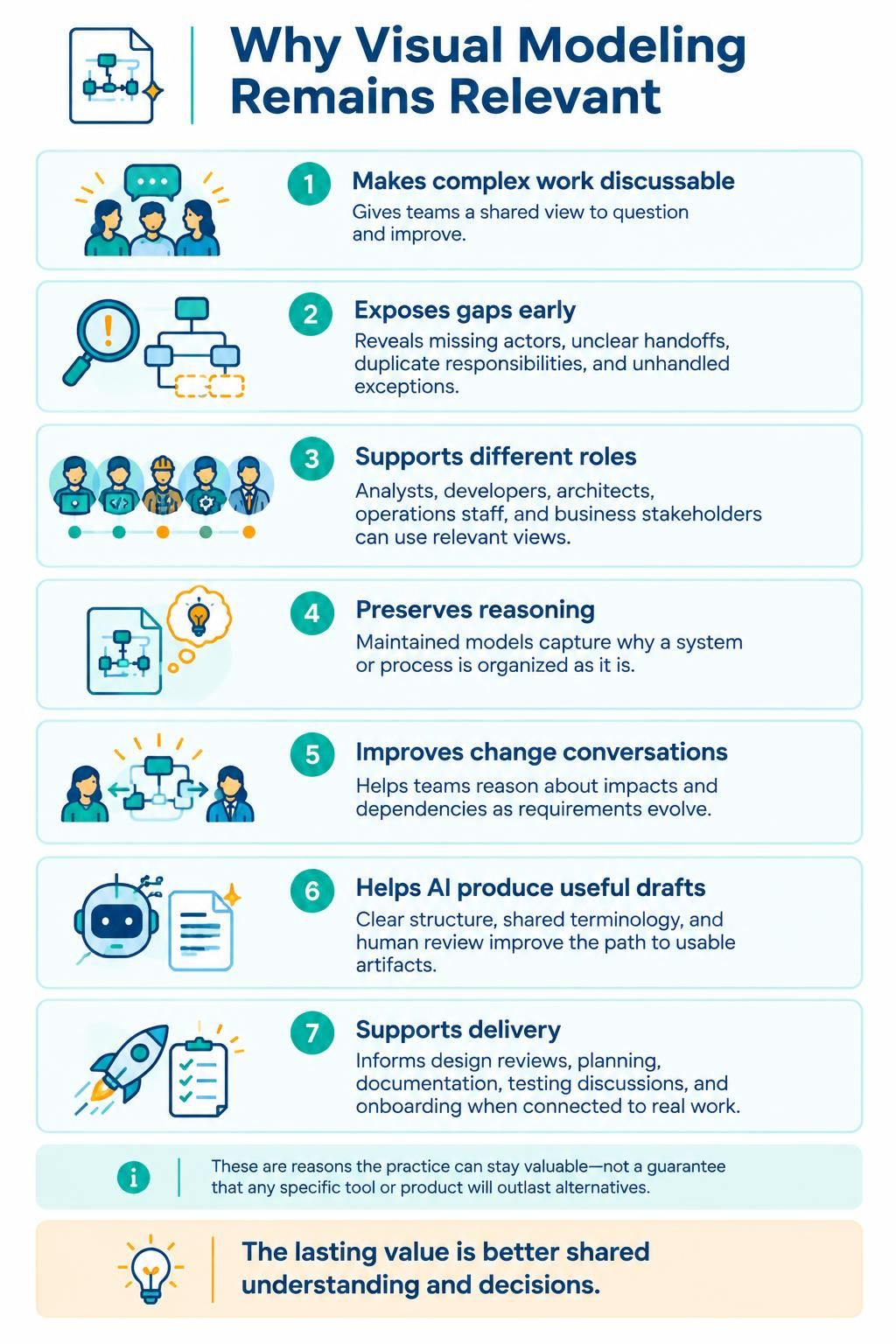
Discover why visual modeling remains essential for system architecture. Learn how Visual Paradigm helps teams structure complex thoughts, expose gaps early, and drive better decisions.
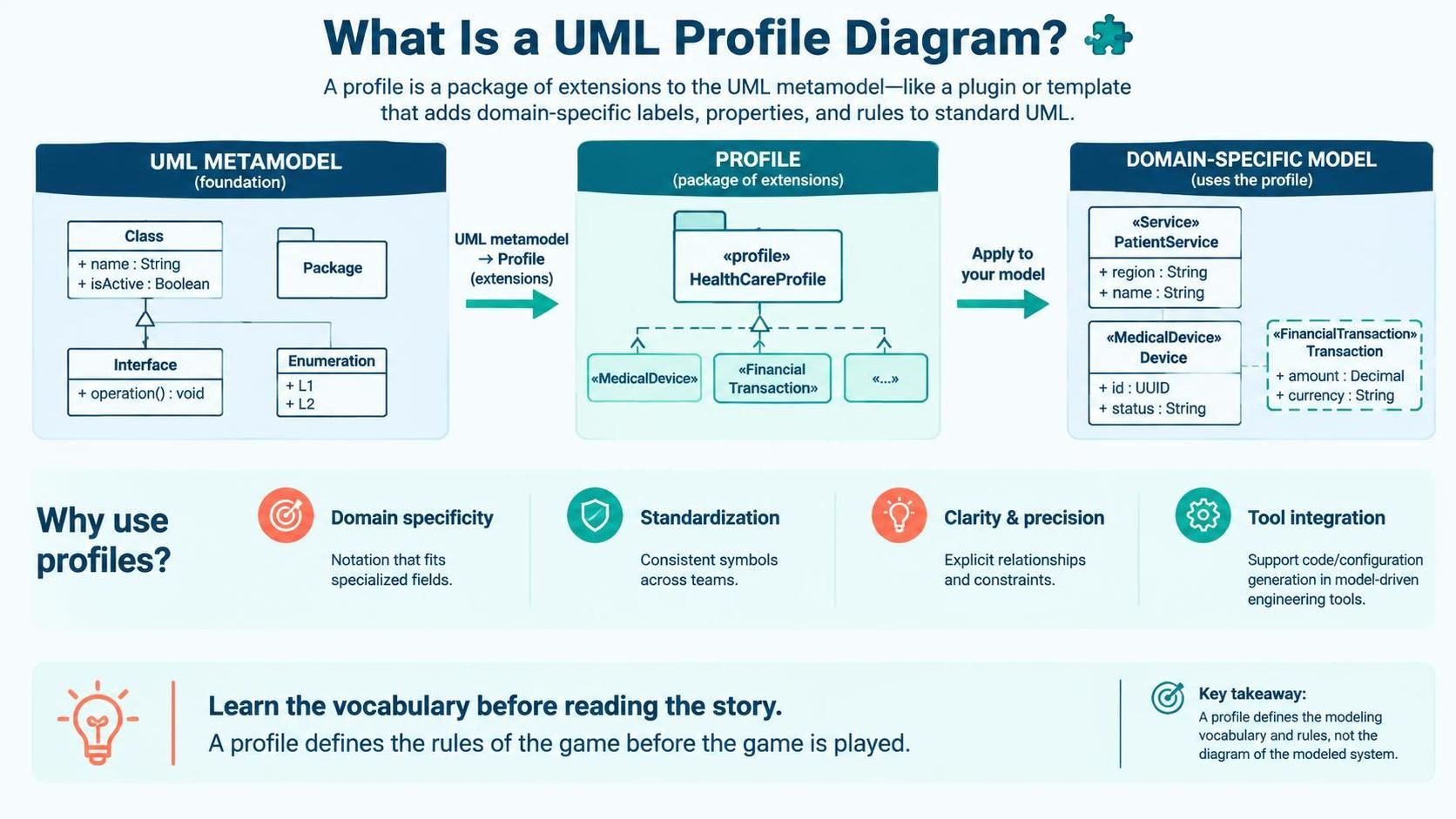
Learn how UML Profile Diagrams extend the metamodel to create domain-specific vocabularies, ensuring precision in modeling unique industry concepts like Medical Devices or Financial Transactions.
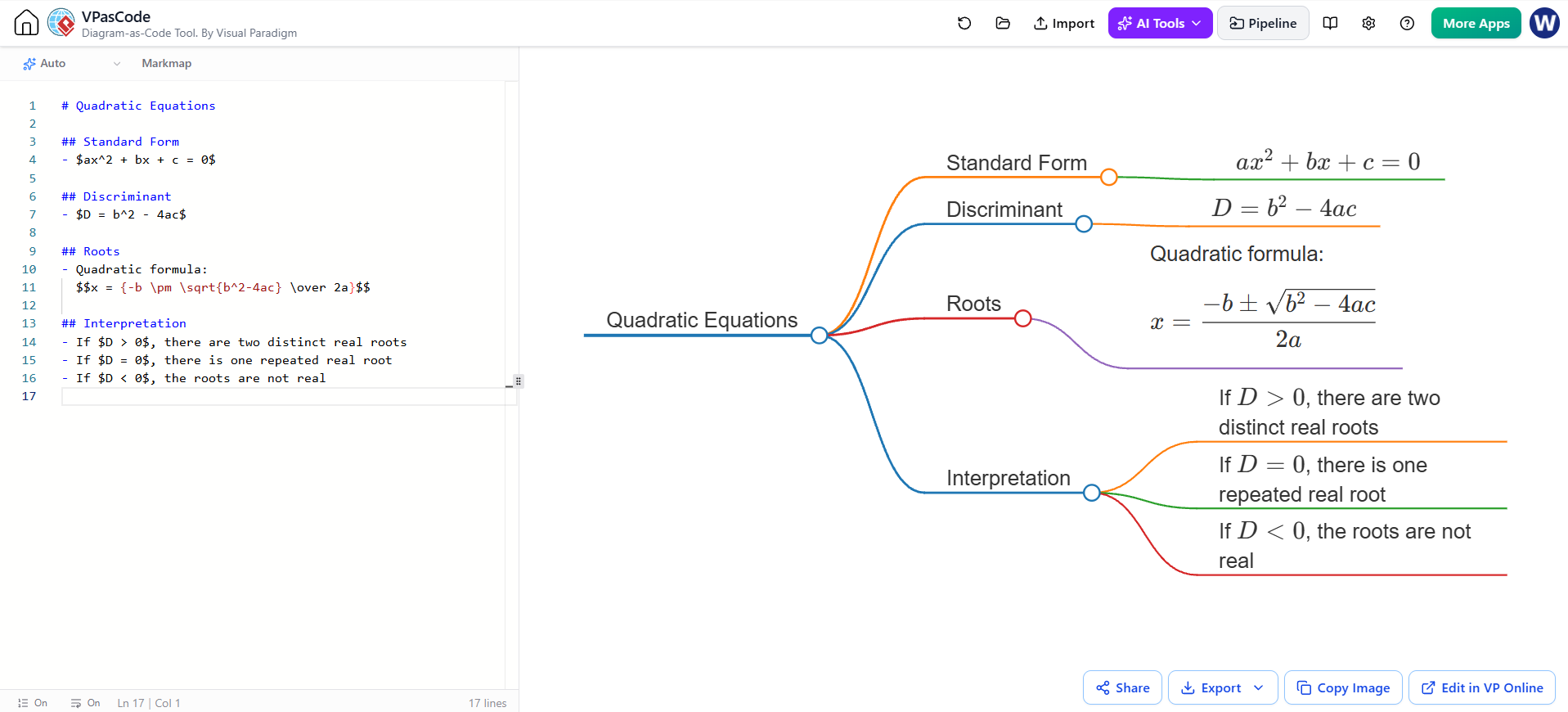
Learn to convert mathematical theory into visual mind maps using VPasCode. Master Markdown syntax and mathematical rendering to automate diagram creation from structured text.
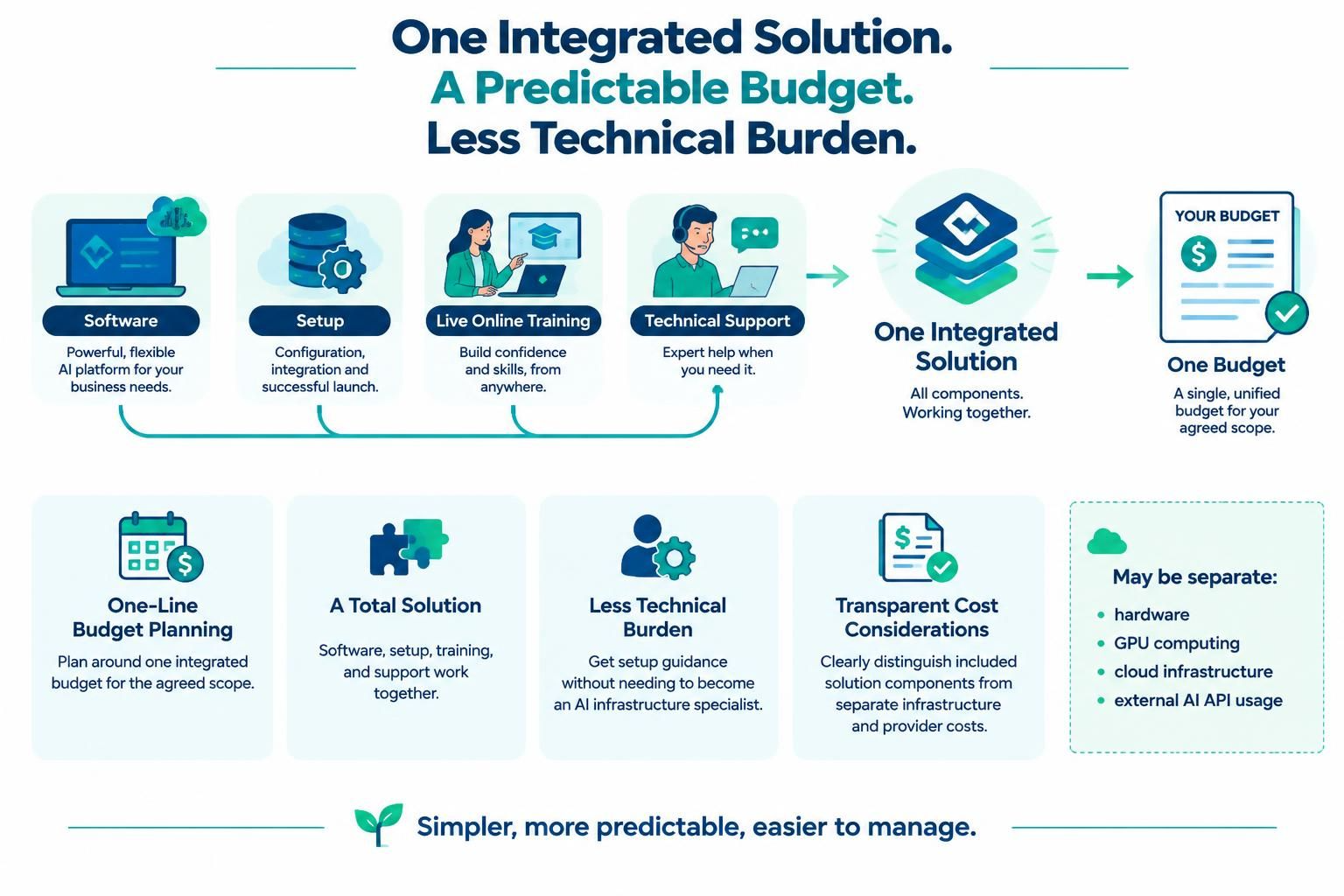
Discover how Visual Paradigm's AI framework unifies software, configuration, and support into a single solution to streamline architecture, simplify budgeting, and accelerate enterprise AI adoption.
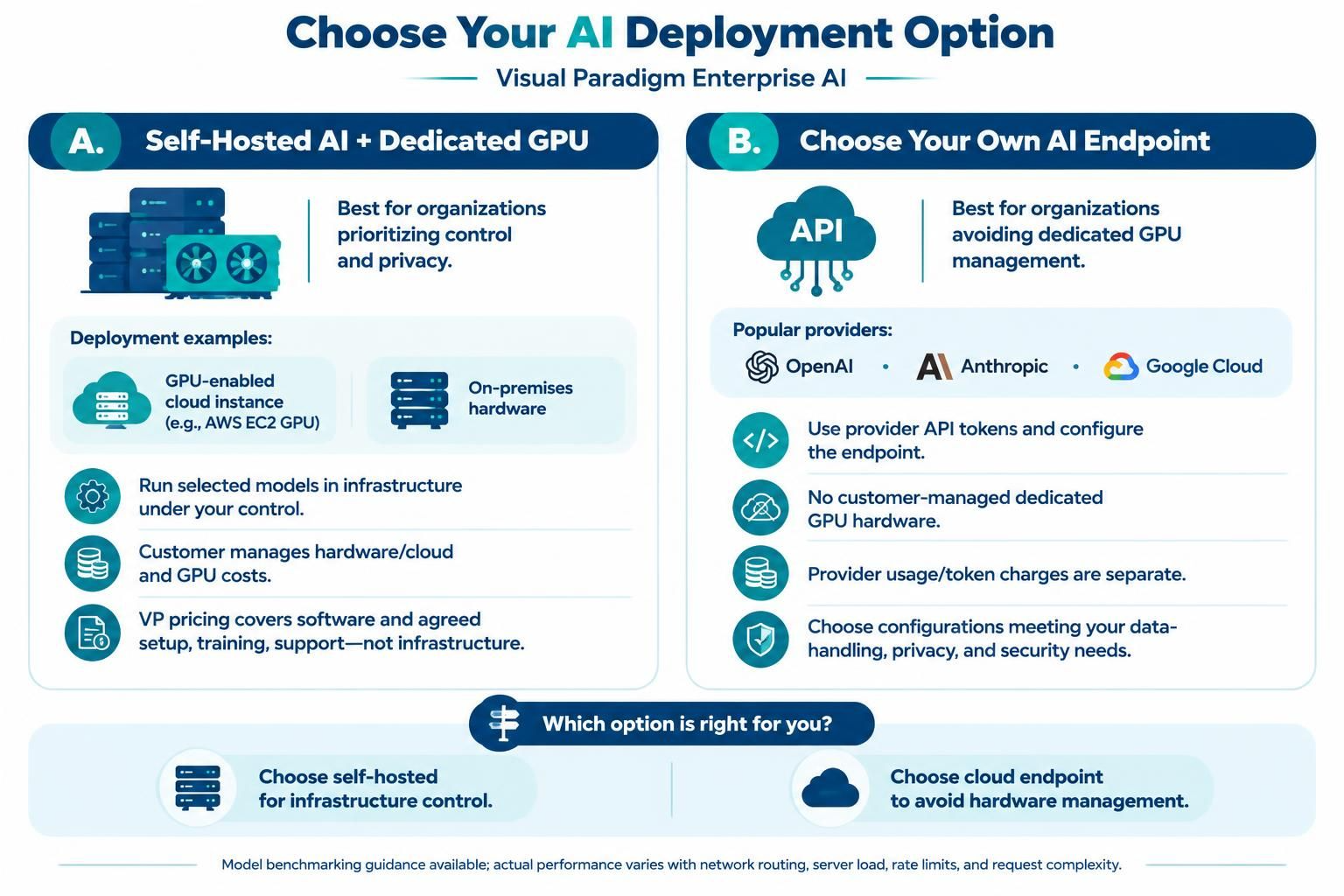
Learn how Visual Paradigm's modular AI architecture supports Self-Hosted AI and Choose Your Own AI Endpoint strategies to balance infrastructure control with operational agility.
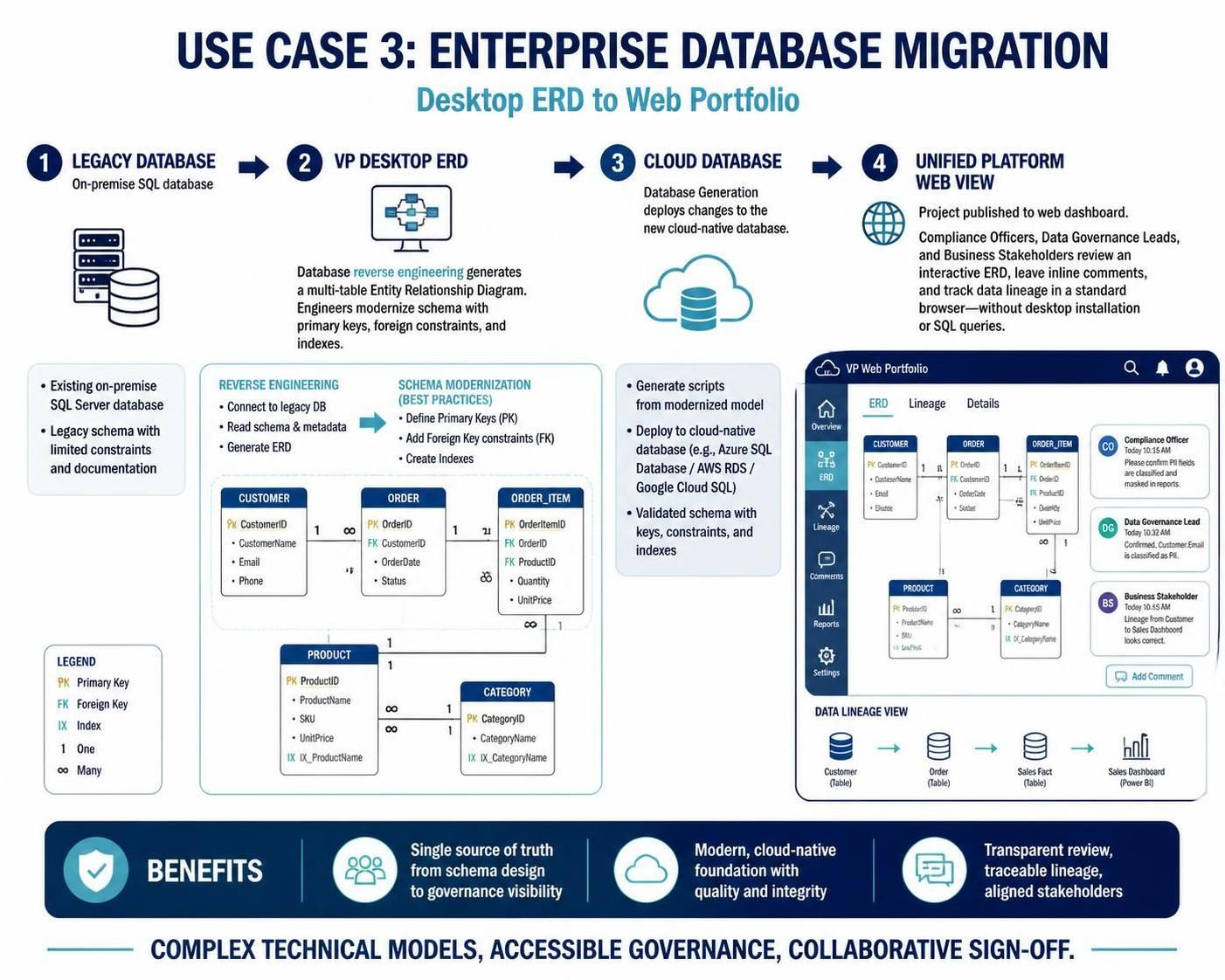
Learn to migrate legacy SQL to cloud-native environments using Visual Paradigm to reverse engineer ERDs, modernize architecture, and streamline governance for non-technical stakeholders.
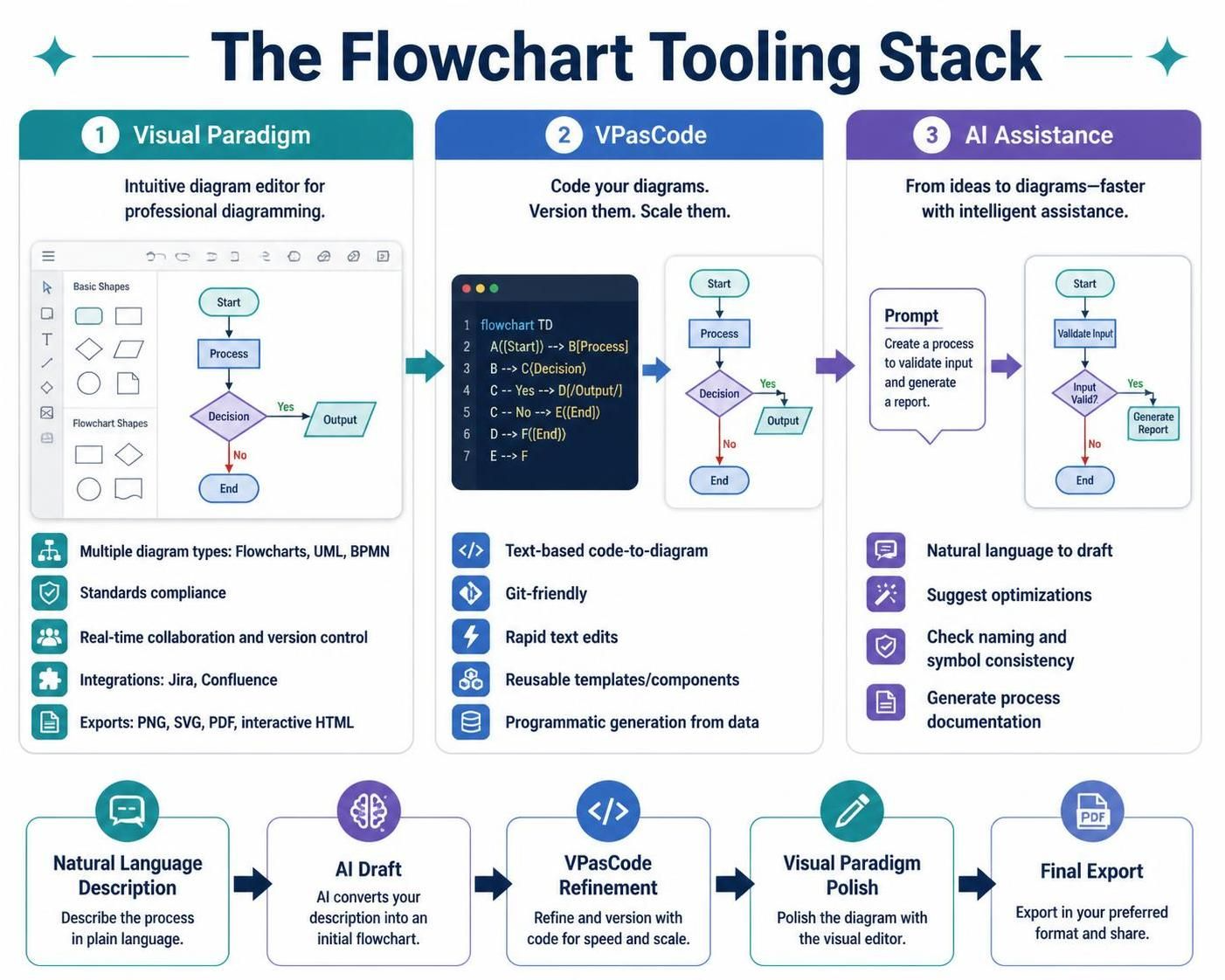
Discover how to streamline process diagrams using Visual Paradigm, VPasCode, and AI orchestration for BPMN, UML, and enterprise-grade compliance.
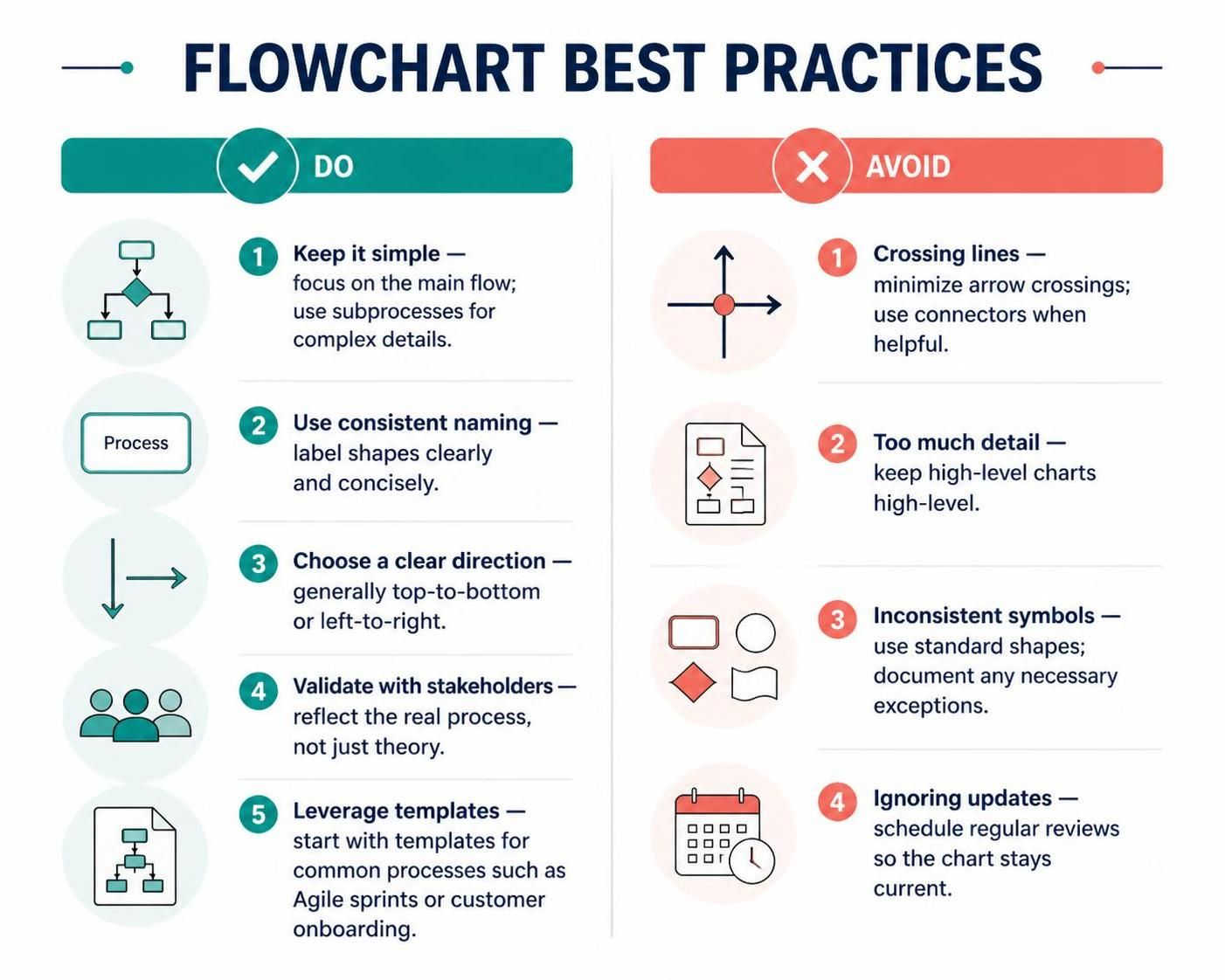
Master flowchart best practices with VPasCode to create clear system models. Learn abstraction strategies and standardization techniques that eliminate clutter and enhance stakeholder communication.
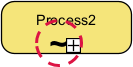
Discover how the BPMN Adhoc Marker (~) suspends rigid sequence rules to grant human actors autonomy in defining dynamic task execution order within sub-processes.
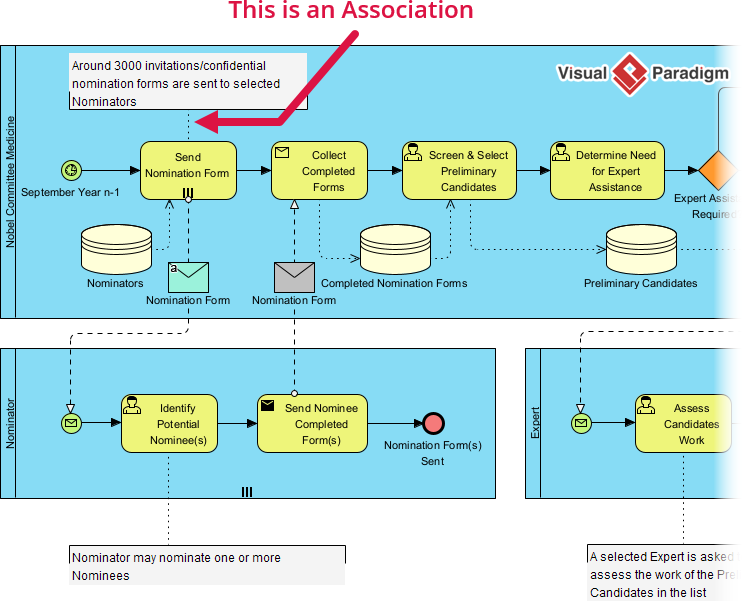
Learn how to use BPMN Associations in Visual Paradigm to enrich process models with annotations and artifacts without disrupting workflow logic.
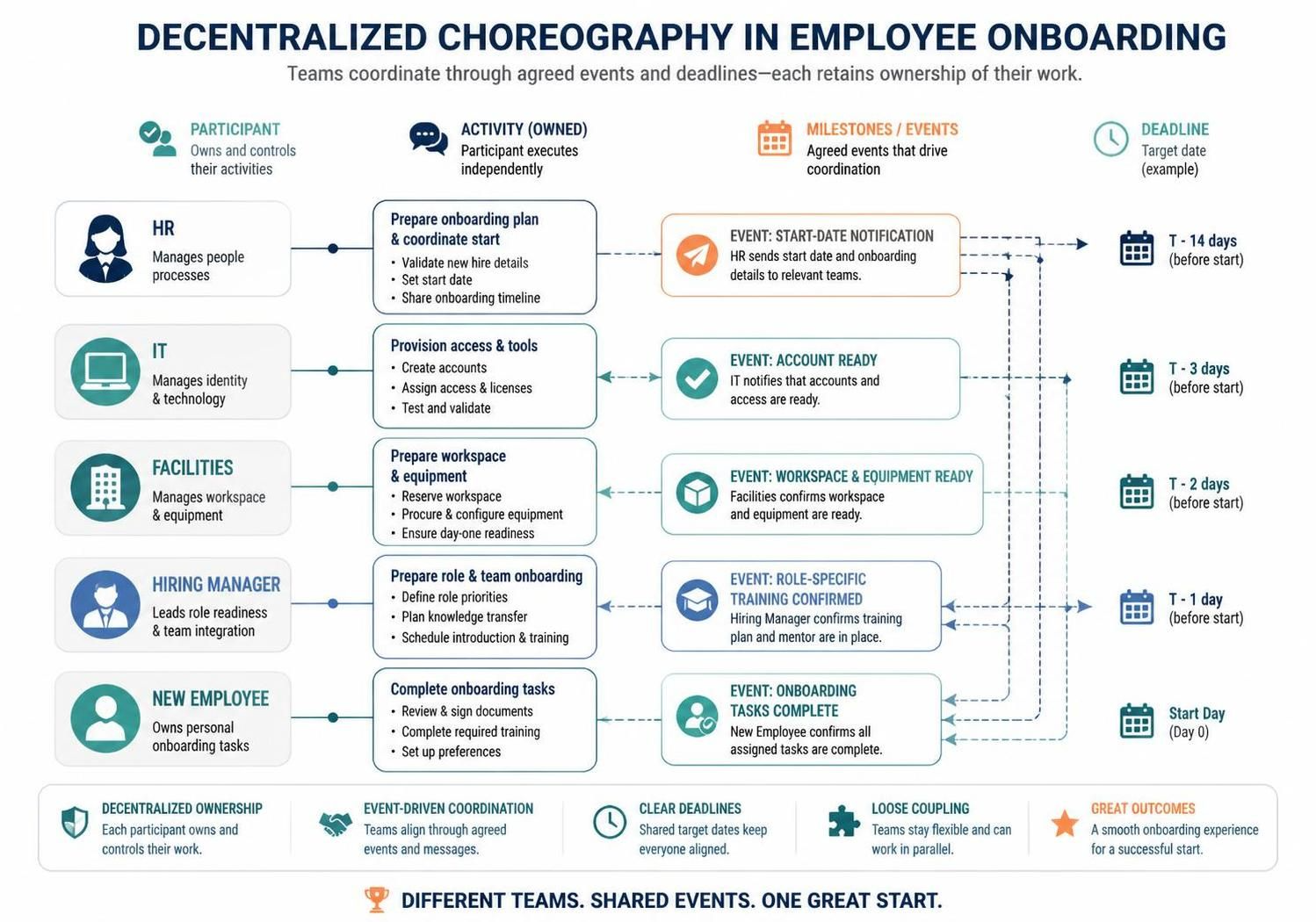
Discover how to model resilient employee onboarding using decentralized choreography instead of central orchestration. Learn to build loosely coupled workflows where teams coordinate through shared events for greater flexibility.
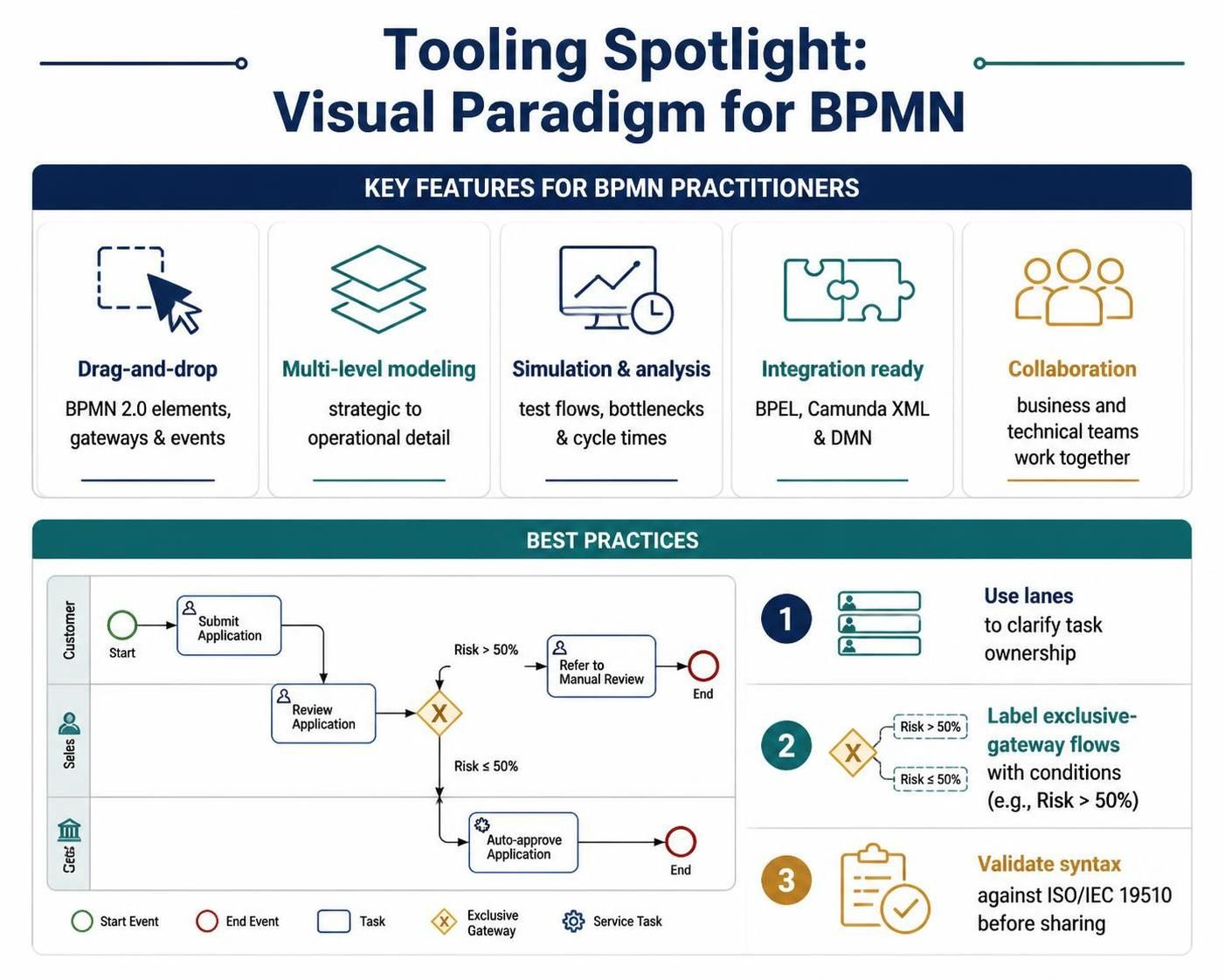
Learn to master BPMN 2.0 architecture in Visual Paradigm by modeling complex workflows with precision, clarity, and operational agility for enterprise success.
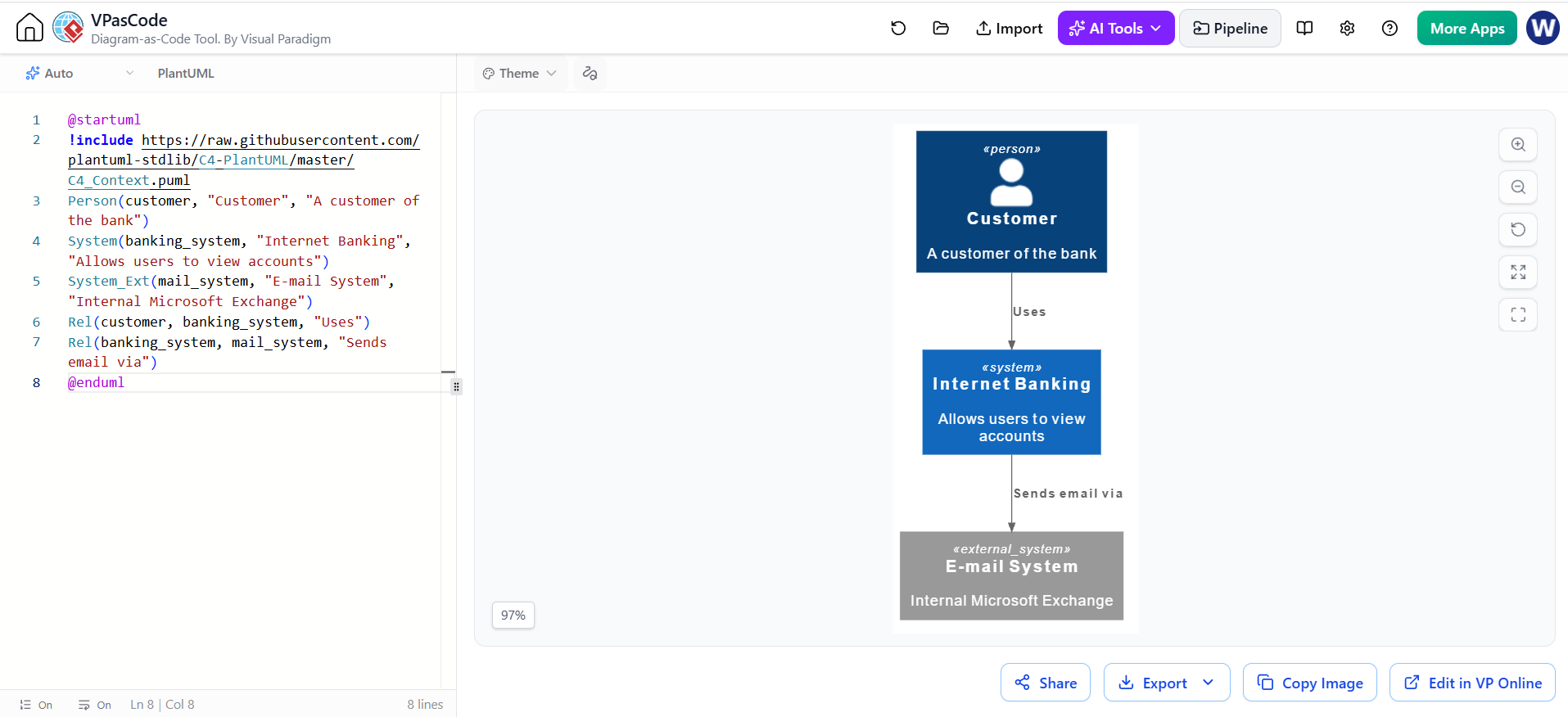
Learn to create C4 Level 1 System Context Diagrams with VPasCode to visualize system boundaries and external interactions in your software architecture.
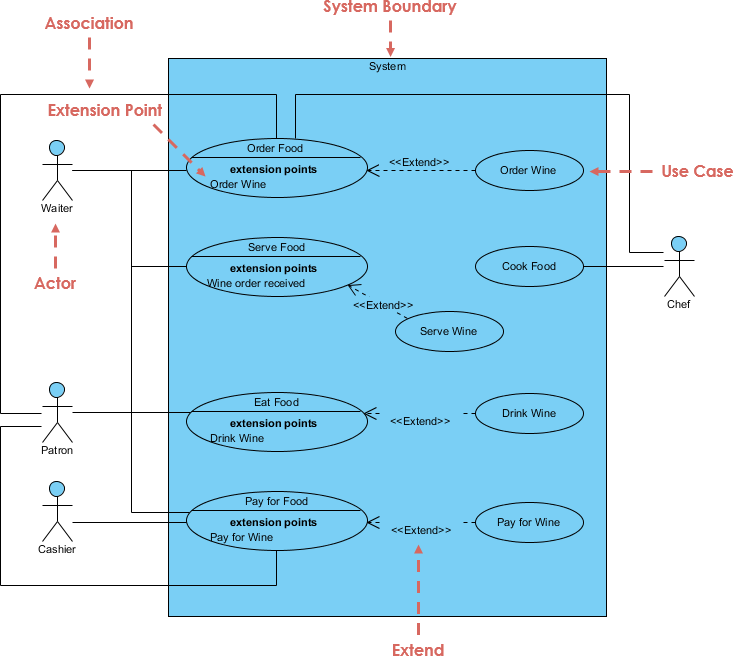
Learn to model actor interactions and system boundaries using Use Case Diagrams in restaurant management systems with clear UML notation and association rules.

Master the Enhanced PERT Chart in Visual Paradigm to integrate RACI matrices, dependencies, and resource management for dynamic project scheduling.
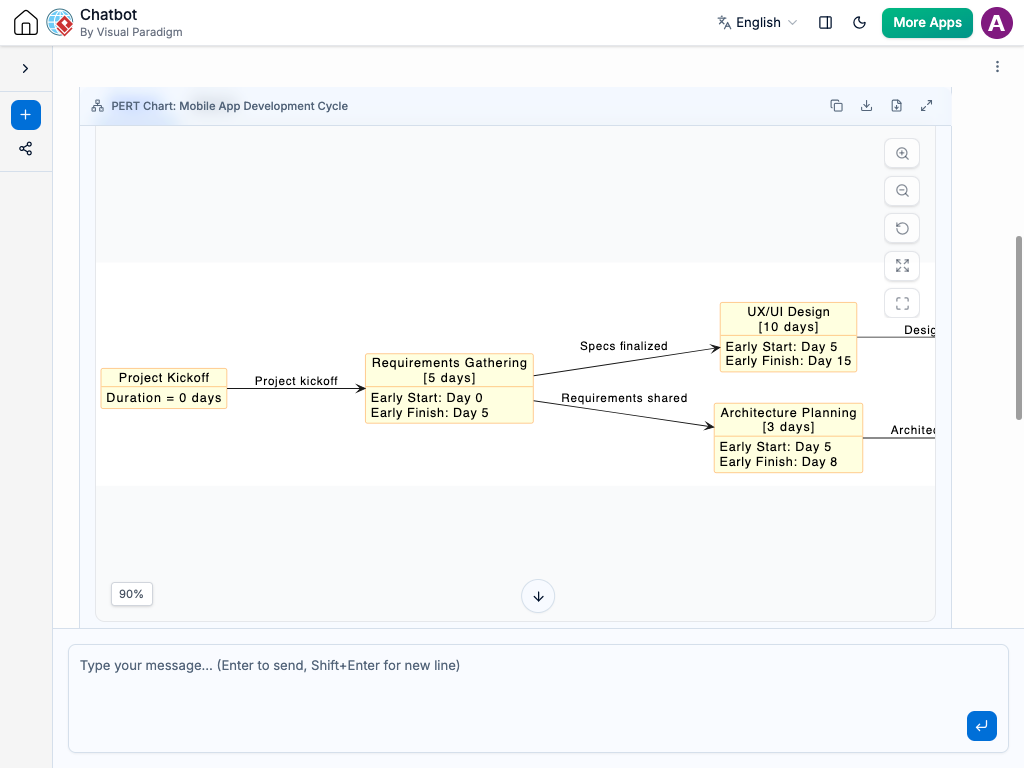
Learn to build professional PERT charts instantly using Visual Paradigm's AI to automate scheduling, manage dependencies, and identify critical paths for complex projects.
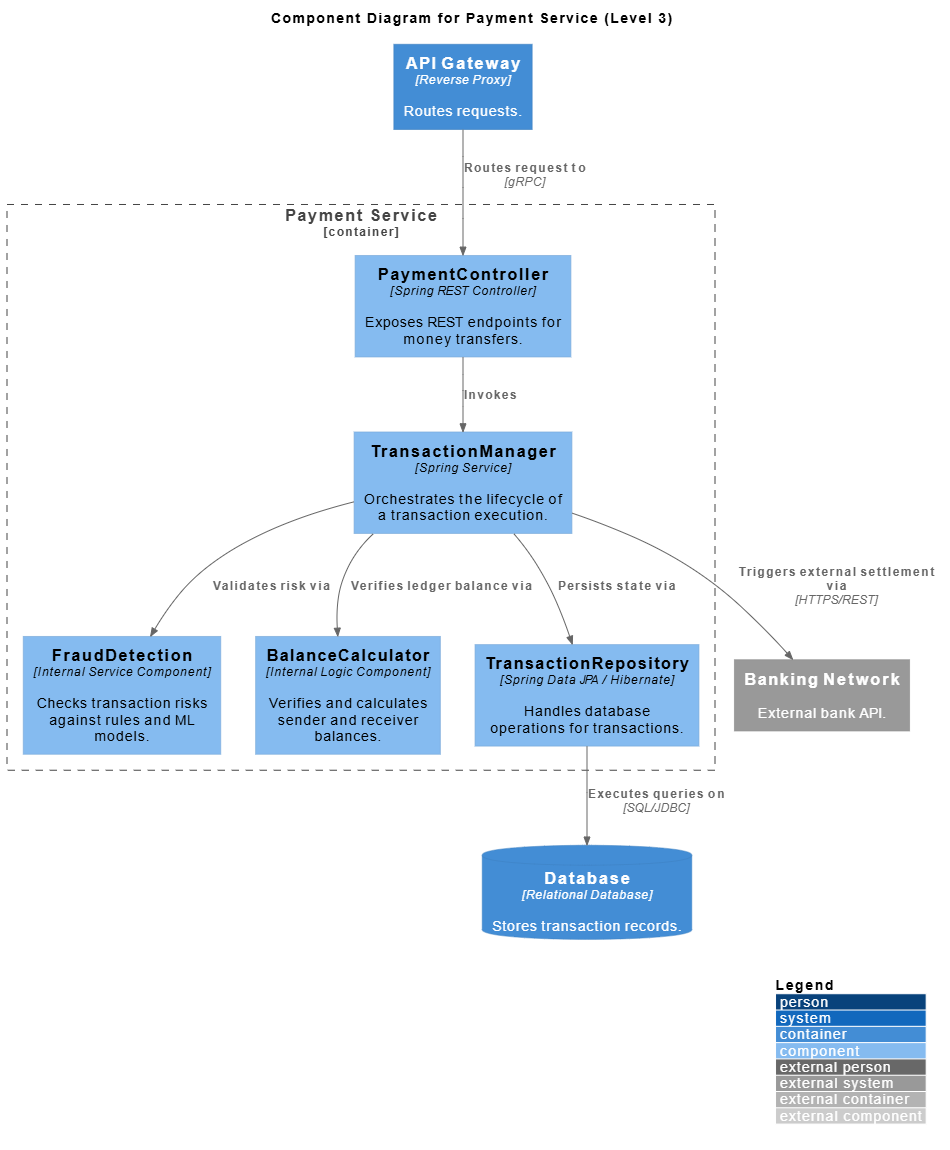
Master Level 3 C4 Component Diagrams for Payment Services. Learn to visualize internal architecture, API Gateway routing, and data flow using Visual Paradigm.
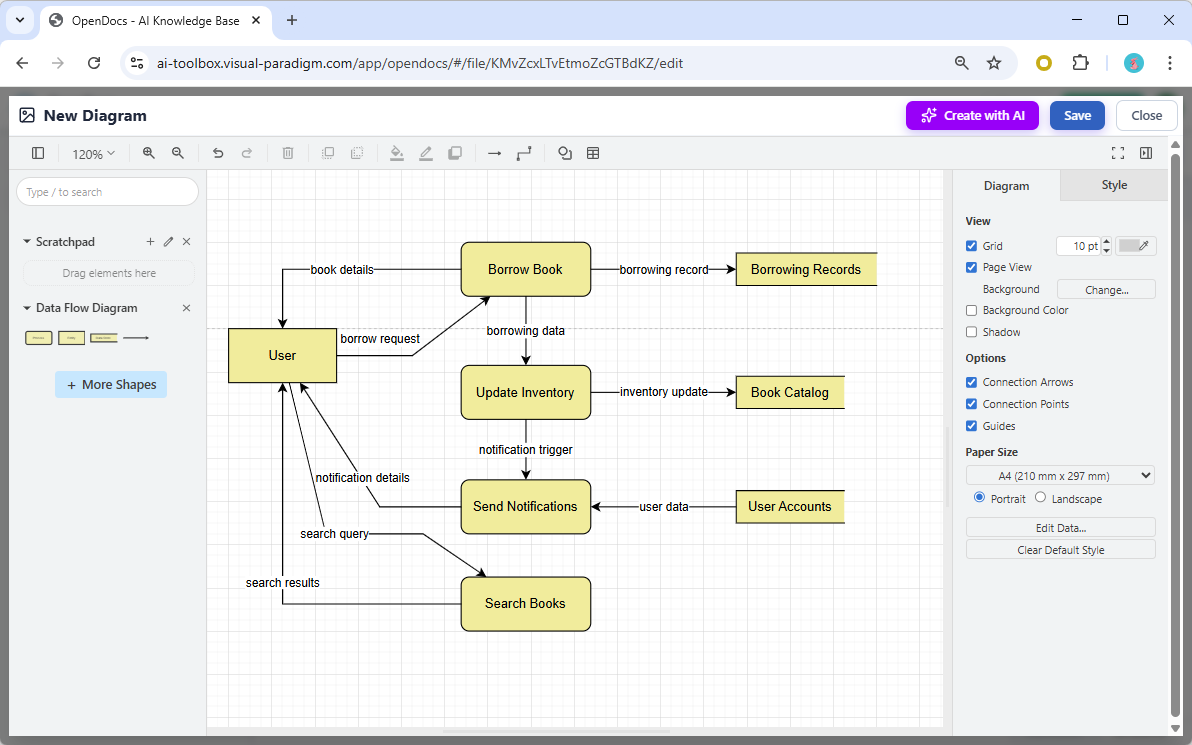
Learn to model library systems with OpenDocs by mastering Data Flow Diagrams, understanding core components like processes and data stores, and applying strict modeling rules for clarity.
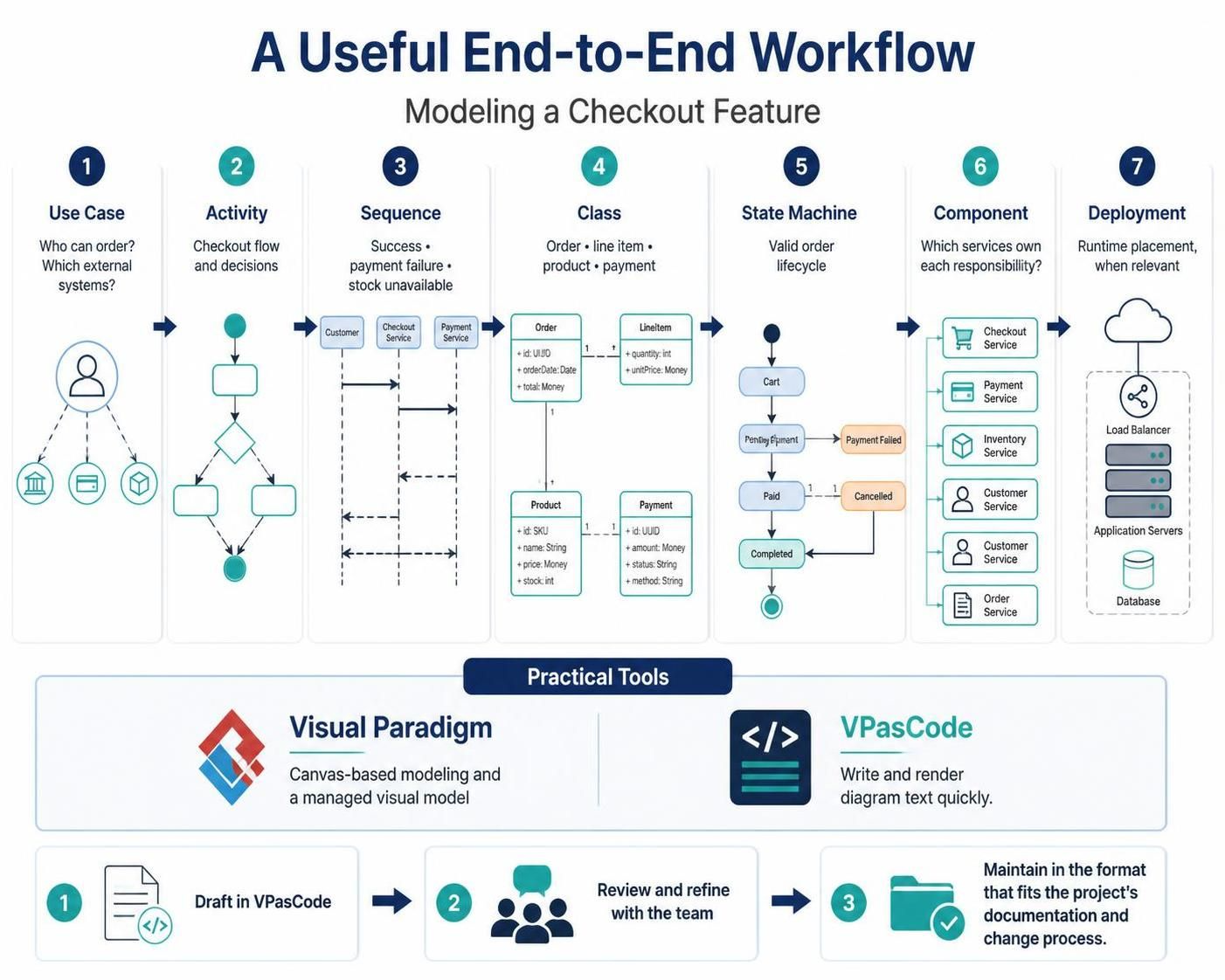
Learn to model a robust checkout feature using VPasCode and Visual Paradigm through a 7-step workflow from use cases to infrastructure.
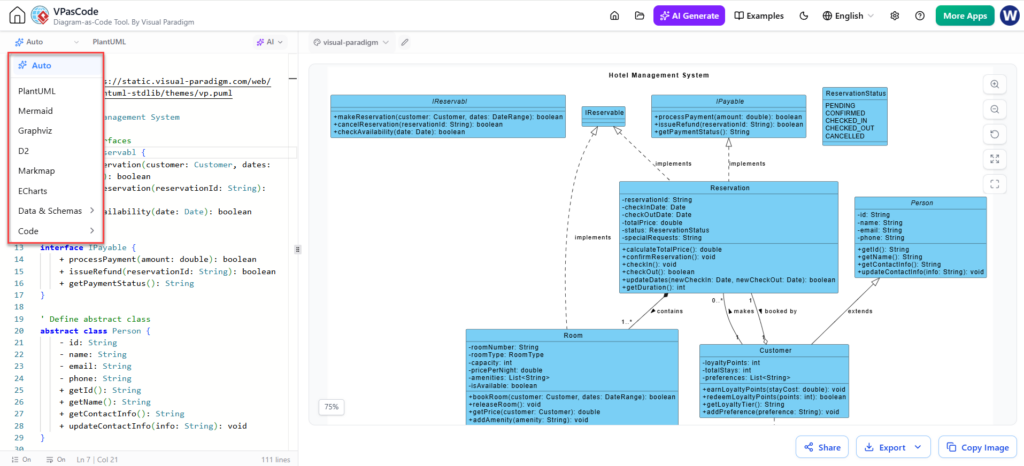
Master Class Diagrams with VPAs Code using PlantUML syntax and AI integration to build portable, version-controlled software architectures faster than traditional drag-and-drop tools.
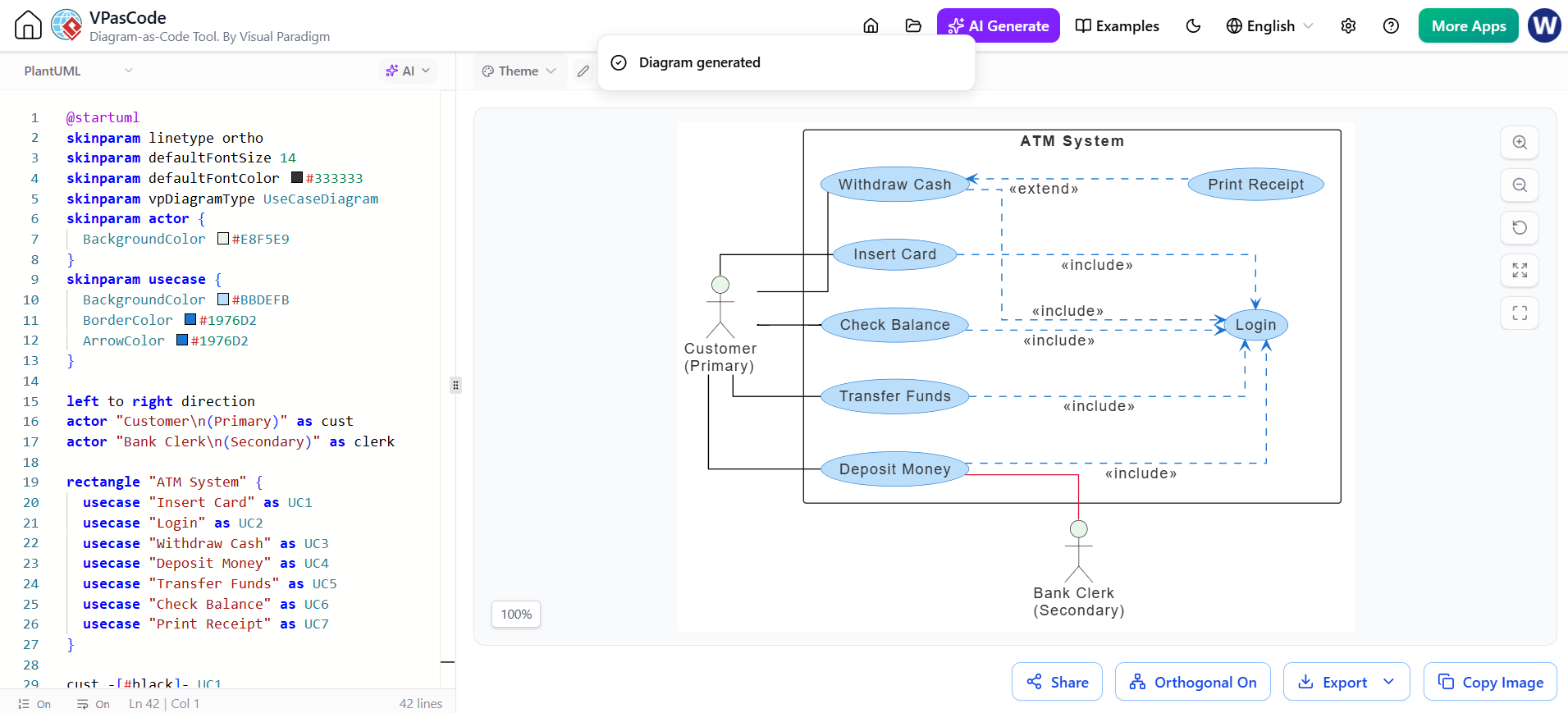
Learn to architect ATM systems using VPa Code's AI-driven Instant Feedback Loop to generate real-time UML Use Case Diagrams from natural language prompts.
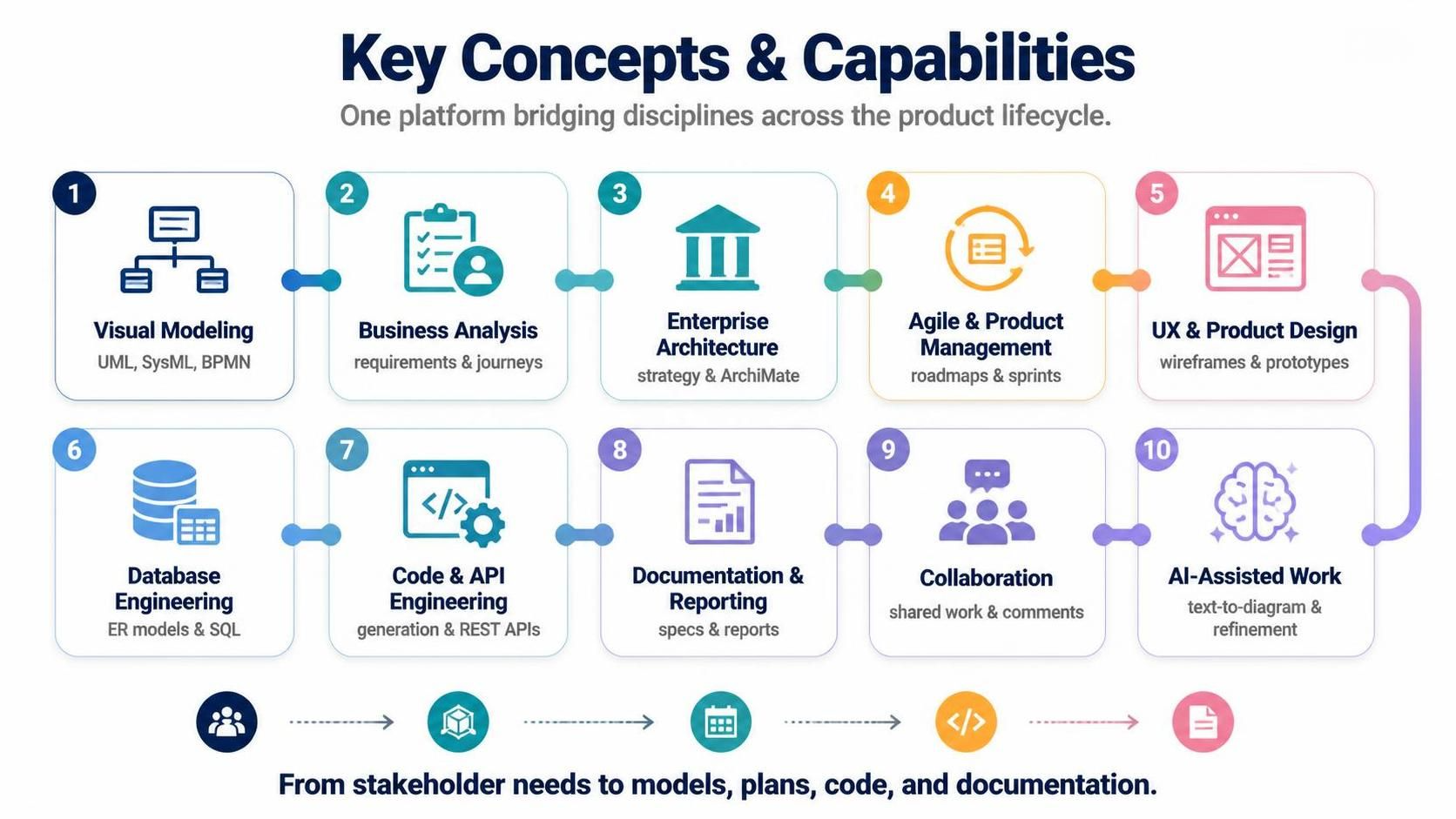
Discover how the Unified Platform bridges strategy to code using BPMN, UML, and AI to eliminate silos and streamline the entire system lifecycle.
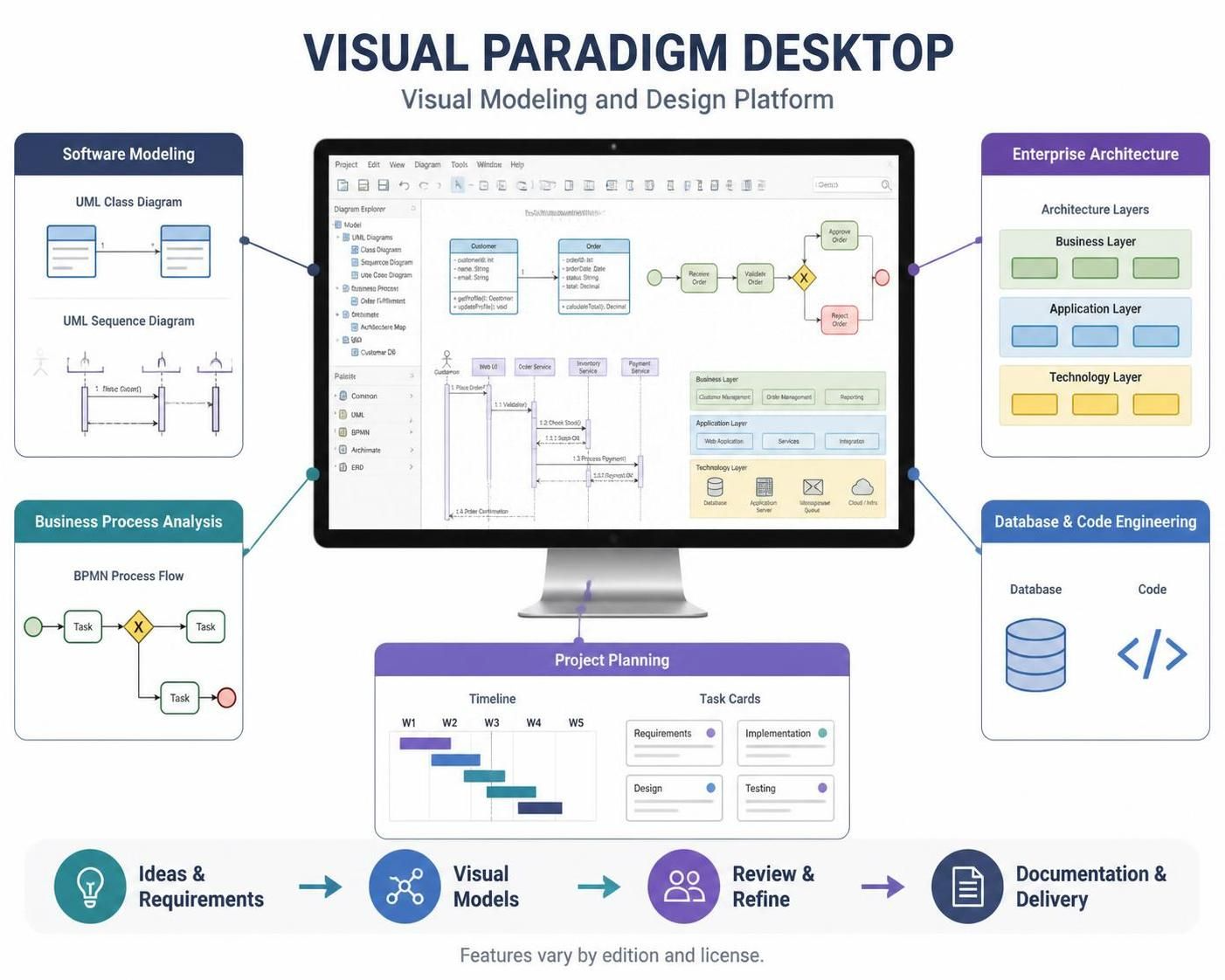
Learn to bridge conceptual ideas and executable code in Visual Paradigm Desktop using BPMN, UML, and ERD modeling within a unified SDLC workflow.