
Understanding the external environment is a cornerstone of strategic planning. For organizations of any size, navigating the complexities of the market requires a structured approach to risk and opportunity assessment. The PEST analysis framework provides a clear lens through which leaders can view the macro-environmental factors affecting their business. This guide offers a detailed component breakdown of PEST analysis, helping you understand how Political, Economic, Social, and Technological forces shape decision-making. 📊
What Is PEST Analysis? 🤔
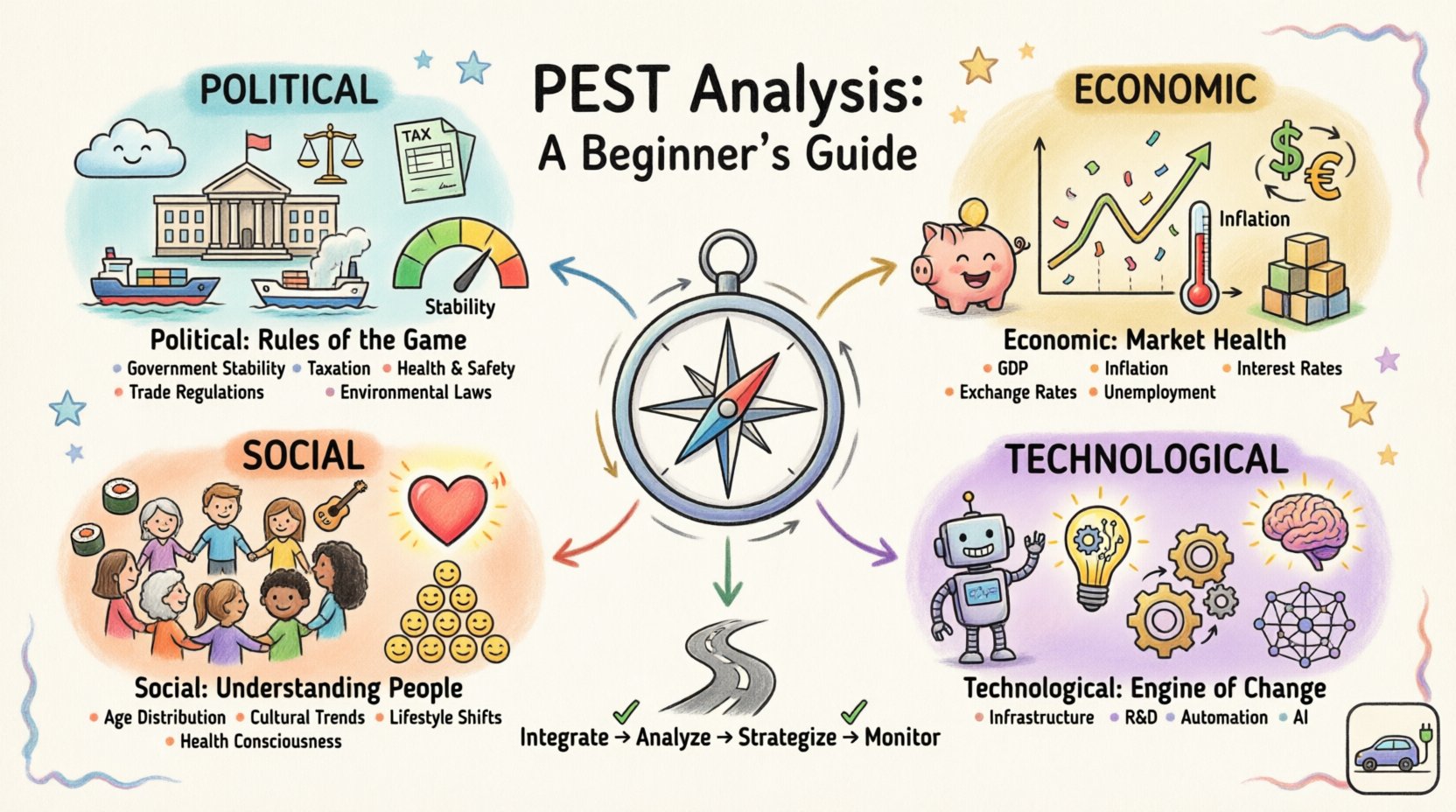
PEST analysis stands for Political, Economic, Social, and Technological. It is a strategic tool used to identify and analyze the external factors that impact an organization. Unlike internal audits which focus on resources and capabilities, PEST looks outward. It helps teams anticipate changes in the business landscape before they become critical issues.
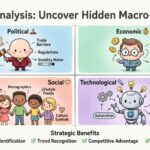
When applied correctly, this framework moves beyond simple guesswork. It relies on data and observation to forecast trends. Here are the core pillars:
- Political: Government interventions and policies.
- Economic: Financial conditions and growth patterns.
- Social: Cultural trends and demographic shifts.
- Technological: Innovations and infrastructure developments.
Using this method allows for a holistic view. It prevents tunnel vision where only immediate revenue is considered. Instead, long-term viability is assessed against the backdrop of the wider world. 🌍
1. Political Factors: The Rules of the Game 🏛️
Political factors encompass the degree to which government influences the economy. This includes tax policy, labor law, environmental regulation, trade restrictions, tariffs, and political stability. These elements dictate the operating conditions for businesses. A change in government can lead to immediate shifts in policy that affect profitability.
Key Considerations
When evaluating political stability, consider the following:
- Government Stability: How long has the current administration been in power? Frequent elections or coups create uncertainty.
- Taxation: Corporate tax rates directly impact net income. Changes here can alter investment strategies.
- Trade Regulations: Tariffs and quotas affect import and export costs. This is critical for supply chain management.
- Health and Safety: Regulations regarding workplace safety can increase operational costs.
- Environmental Laws: Compliance with emissions standards or waste disposal rules is mandatory in many jurisdictions.
For example, a company planning to expand into a new country must first review the political climate. If the region has high corruption or unstable governance, the risk profile increases significantly. Conversely, a stable government offering tax incentives for green energy can present a major opportunity. 🌱
Impact on Strategy
Political factors often require compliance teams to be involved early. Ignoring these elements can lead to fines or shutdowns. Strategic planning must account for potential policy shifts. This means maintaining flexibility in operations so that sudden regulatory changes do not cripple the business model.
2. Economic Factors: The Health of the Market 💰
Economic factors describe how the economy affects the business. This includes economic growth, interest rates, exchange rates, inflation, and disposable income. These indicators determine the purchasing power of potential customers and the cost of capital for the organization.
Key Economic Indicators
Analysts track several metrics to gauge economic health:
- Gross Domestic Product (GDP): Measures the value of goods and services produced. Rising GDP usually signals a healthy market.
- Inflation Rates: High inflation erodes purchasing power. It also increases the cost of raw materials.
- Interest Rates: Set by central banks, these influence borrowing costs. High rates make expansion expensive.
- Exchange Rates: Fluctuations affect the cost of imports and the competitiveness of exports.
- Unemployment Levels: High unemployment may lower wages but also reduce consumer spending.
Recession vs. Expansion
During an economic recession, consumer confidence drops. People spend less on non-essential goods. Businesses may need to pivot to value-oriented offerings. In contrast, an economic boom encourages spending and investment. However, rapid growth can lead to inflation, which creates its own set of challenges.
Understanding these cycles helps in timing market entry. Entering a market at the peak of a cycle might lead to saturation. Entering during a downturn could mean acquiring assets at a lower cost. 📉
Global vs. Local Economies
Not all economies move in sync. A company operating globally must analyze the specific economic conditions of each region. A strong domestic currency might hurt exports, while a weak currency might help them. Diversifying markets can mitigate the risk of a localized economic downturn.
3. Social Factors: Understanding the People 👥
Social factors analyze the human aspects of the market. This includes demographic trends, cultural barriers, health consciousness, and lifestyle changes. These factors determine the demand for products and services. If a product does not align with social values, it will struggle to gain traction.
Demographic Shifts
Population data is crucial for forecasting. Consider the following demographics:
- Age Distribution: An aging population requires different products than a youth-heavy one.
- Population Growth: Rapid growth creates demand for housing and infrastructure.
- Income Distribution: Understanding wealth inequality helps in targeting price points.
- Education Levels: Higher education often correlates with higher spending power and specific preferences.
Cultural Trends
Culture influences consumer behavior deeply. What is acceptable in one region may be offensive in another. Companies must respect local customs and traditions. Additionally, social movements can drive demand for ethical products. For instance, the rise of sustainability has pushed consumers toward eco-friendly packaging.
Health and Lifestyle
Health consciousness is a major driver in the modern economy. There is a growing preference for organic foods, fitness tracking, and mental health support. Brands that ignore these shifts risk becoming obsolete. Conversely, aligning with wellness trends can open new revenue streams. 🏃♂️
4. Technological Factors: The Engine of Change 🚀
Technological factors examine the innovation landscape. This includes research and development activity, automation, technological incentives, and the rate of technological change. Technology can disrupt entire industries overnight. It creates new opportunities for efficiency and customer engagement.
Infrastructure and Access
Technology relies on infrastructure. Internet penetration rates determine the viability of digital services. In regions with poor connectivity, digital strategies may fail. Companies must assess whether the necessary hardware and network capabilities exist before launching.
Innovation and R&D
The pace of innovation dictates how long a product remains relevant. In the tech sector, products can become obsolete in months. In manufacturing, the cycle is longer. Organizations must invest in research and development to stay competitive. R&D is not just about creating new products; it is about improving existing processes.
Automation and AI
Automation changes labor dynamics. It can reduce costs but also displace workers. Artificial Intelligence offers predictive analytics and customer service improvements. However, implementing these technologies requires significant capital and expertise. Companies must weigh the benefits against the implementation risks.
Integrating the Factors: A Structured Approach 📋
Conducting a PEST analysis is not just about listing factors. It requires synthesizing the information to find actionable insights. The four categories interact with one another. A political decision can affect the economy. Social trends drive technological adoption.
Step-by-Step Execution
- Gather Data: Collect information from reliable sources for each category.
- Identify Trends: Look for patterns over time, not just current snapshots.
- Assess Impact: Determine which factors have the highest impact on your specific industry.
- Develop Strategy: Align business goals with the opportunities and risks identified.
- Monitor: External environments change. Review the analysis regularly.
Comparison Table
The table below summarizes the focus areas for each component:
| Factor | Focus Area | Key Question |
|---|---|---|
| Political | Government Policy | How do laws affect operations? |
| Economic | Financial Health | Can customers afford our product? |
| Social | Culture & Demographics | Do our values match theirs? |
| Technological | Innovation | What tools do we need to survive? |
Common Pitfalls to Avoid ⚠️
Even with a solid framework, errors can occur during analysis. Being aware of common mistakes helps ensure accuracy.
- Data Quality: Relying on outdated statistics leads to poor decisions. Always use the most recent data available.
- Bias: Confirming pre-existing beliefs rather than seeking objective truth. Challenge assumptions during the process.
- Overlooking Interactions: Treating factors in isolation ignores how they influence each other.
- Static Analysis: Treating the analysis as a one-time event. The environment is dynamic and requires regular updates.
- Ignoring Micro-Environments: Focusing too much on macro factors and missing local industry specifics.
Case Application: The Automotive Industry 🚗
To illustrate how these components work together, consider the automotive sector.
- Political: Governments are imposing stricter emission standards. Subsidies are available for electric vehicles.
- Economic: Rising interest rates make car loans more expensive, potentially slowing sales.
- Social: Consumers prefer shared mobility over ownership. Urbanization reduces the need for personal cars.
- Technological: Advances in battery technology extend range. Autonomous driving features are becoming standard.
A manufacturer ignoring the political push for electrification would lose market share. A company ignoring the economic shift in interest rates might overestimate demand. Success requires balancing all four elements.
Looking Ahead: Future-Proofing Strategy 🔮
Strategic planning is an ongoing process. The world changes faster than ever before. What was true five years ago may not apply today. Organizations must build agility into their structures. This allows them to pivot when the PEST factors shift.
Regular reviews of the external environment ensure that the business remains relevant. It is not about predicting the future perfectly, but about preparing for various scenarios. By understanding the components of PEST analysis, leaders can navigate uncertainty with confidence. 🛡️
Frequently Asked Questions ❓
How often should I conduct a PEST analysis?
There is no fixed rule, but an annual review is common. In fast-moving industries like technology, quarterly reviews may be necessary.
Can PEST be used for non-profits?
Yes. Non-profits face similar external pressures regarding funding, regulation, and social needs.
What is the difference between PEST and SWOT?
SWOT includes internal factors (Strengths and Weaknesses), whereas PEST focuses exclusively on external macro-environmental factors.
Is PEST analysis enough for strategic planning?
It is a vital starting point, but it should be combined with other tools like SWOT or Porter’s Five Forces for a comprehensive view.
Final Thoughts on Strategic Clarity 🧭
External factors dictate the boundaries within which a business operates. Political shifts, economic cycles, social changes, and technological breakthroughs all set the stage. Ignoring them leaves an organization vulnerable. Engaging with them creates a roadmap for resilience.
By breaking down the components of PEST analysis, this guide has provided a foundation for understanding the macro-environment. Use this framework to inform decisions, allocate resources, and plan for the future. The goal is not control over the environment, but adaptation to it. With a clear understanding of these factors, your organization can move forward with purpose and clarity.
Related posts:
 Definitive Overview of PEST Analysis: The Essential Framework for Strategic Market Entry
 Q&A on PEST Analysis: Expert Answers to Your Most Pressing Market Entry Questions
 Tutorial PEST Analysis: From Raw Data to Actionable Strategy for Non-Analysts
 Deep Dive PEST Analysis: Uncovering Hidden Macro-Forces That Kill Competitors Before You Launch